
Silence, Testimony, and the Family Archive
I Know This Much Is TrueThe novel examines how family members conceal, distort, recover, and finally share the stories that shape their identities.
increasing Bearing strength in each event
 decreasing
Bearing strength in each eventdecreasingThe Album Rescued from Fire
The Album Rescued from Fire
A mother’s chosen record
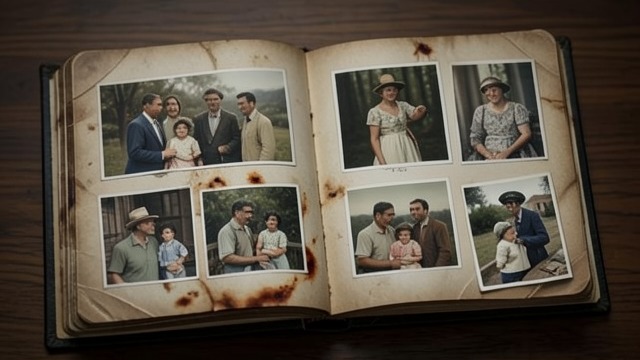
When the family television catches fire, Ma returns to the burning house to rescue her photo album. The act makes the album more than a collection of pictures: it becomes the family’s surviving record, saved at a moment when the household itself is threatened.
Memory out of order
Years later, the album’s pages have been rearranged and reattached without restoring their chronology. The result resembles memory itself: images from different eras sit beside one another, turning family history into a sequence that must be interpreted rather than merely read.
What the pictures omit
The album records family ceremonies, public appearances, and ancestors, but it cannot answer every question it raises. Ma herself appears only rarely, often hiding her lip. The archive preserves evidence of belonging while also showing how shame and omission shaped what the family was willing to display.
A Manuscript Kept in a Box
A Manuscript Kept in a Box
A private history
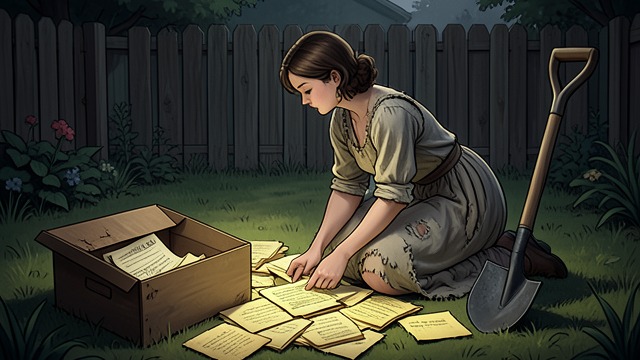
Domenico Onofrio Tempesta begins a life story that he imagines will instruct young Italians, but the work becomes an intensely personal record. He hires Angelo Nardi, experiments with dictation, and ultimately retreats to the backyard to write alone.
A gift delayed
After Domenico dies, his pages scatter across the yard, and Ma gathers them up. She stores the manuscript for decades, never fully reading it herself, then gives it to Dominick shortly before her own death. The object carries both an invitation and an unspoken burden.
A flawed witness
When Dominick finally reads the translated text, he finds not a clean family chronicle but a grandiose, defensive account full of grievances. Its distortions make it valuable in a different way: the manuscript reveals how its author tries to explain himself, not simply what happened.
The Failed Translation
The Failed Translation
A gift under deadline
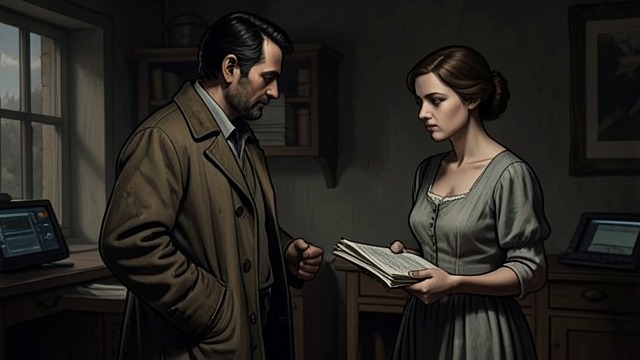
Dominick hires Nedra Frank to translate the manuscript so that his dying mother can read her father’s life story. The plan is a practical expression of love: he tries to create something Ma has never had, a readable account of the ancestor she worships.
Lost in mediation
Nedra’s scholarly distance, her competing pressures, and their personal conflict complicate the project. She disappears with the pages, and Dominick is left unsure whether she has completed, altered, or destroyed them. Translation becomes another experience of dependence on someone else to carry family history safely.
A missed ending
Ma dies without reading the manuscript, leaving Dominick with the guilt of a gift that arrived too late. Her death and the missing text become linked in his mind: both are losses that cannot be repaired by doing the right thing afterward. The unfinished project later becomes part of his effort to understand what the family chose not to say.
Confession Against Silence
Confession Against Silence
An old rule renewed
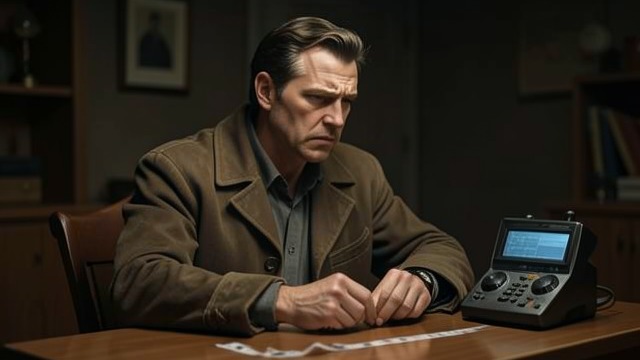
The Birdsey household has long treated certain subjects as forbidden, especially the identity of the twins’ father and the abuse that shaped their childhood. Dominick’s first response to Thomas’s treatment tapes is to deny or correct the painful claims, preserving family privacy even when that privacy hurts him.
Speaking into the record
As he listens, Dominick recognizes that his own memories do not always match Thomas’s. The discrepancy unsettles him: testimony may be distorted by illness, but silence also distorts by refusing to examine what happened. Dr. Patel’s questions force him to distinguish what he knows from what he has long avoided knowing.
A difficult form of truth
The novel does not make confession a simple release. It makes speaking an encounter with uncertainty, grief, and complicity. Dominick must acknowledge his anger and the times he protected himself at Thomas’s expense, without pretending that recollection alone can settle every dispute.
A Father’s Record and a Son’s Name
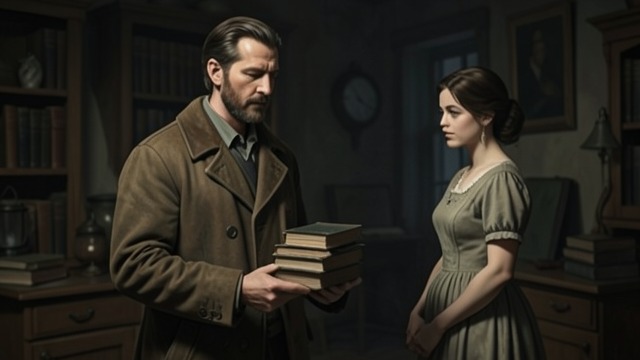
A Father’s Record and a Son’s Name
Searching in the wrong story
Dominick approaches his grandfather’s memoir hoping that it will fill the gap left by his unknown biological father. The manuscript instead reveals Domenico’s self-image, his family conflicts, and his changing account of his own failures.
The delayed revelation
Ray eventually tells Dominick that Henry Joseph Drinkwater was the twins’ father. The revelation comes late and through a stepfather who has often been emotionally withholding, complicating the idea that family truth must come only from a biological parent.
A history with no neat closure
Knowing the name does not restore the years of absence or erase the lies and fears surrounding the twins’ conception. The truth changes Dominick’s sense of kinship, linking him to Ralph Drinkwater and the Wequonnoc family, but it does not solve every mystery about Ma’s choices or Domenico’s record.
During the childhood television fire and its later recollections
From Domenico’s writing in 1949 to Ma’s gift to Dominick in 1986
During Ma’s final months in 1986 and 1987
After Thomas is transferred to Hatch in October 1990
From Dominick’s reading of Domenico’s manuscript to the revelation about Henry Joseph Drinkwater
